
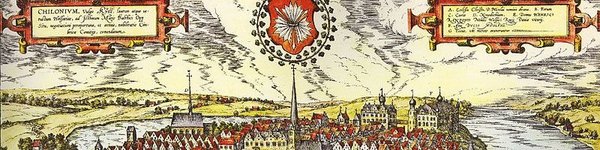
Residential Cities in the Holy Roman Empire (1300-1800)
Urbanity within the integrative and competing relationship structure of seigniorial rulership and civic community
At the centre of the project is the study of the approximately 900 late medieval and early modern residential cities of the Holy Roman Empire, which formed an important element of the European urbanisation processes between the 14th and the early 19th century, the fusion of urban and aristocratic forms of life, the development of the feudal rule and pre-modern statehood.
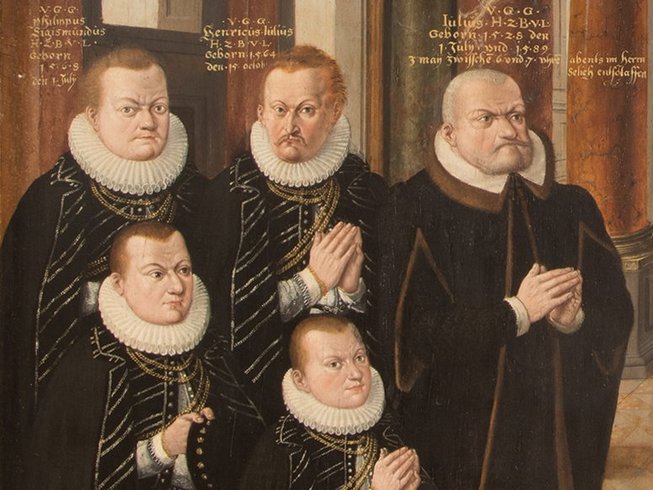
In interdisciplinary collaboration between social and economic history, regional, constitutional, and art history, the focus is primarily on the already quantitatively dominant small-scale contexts outside the major residence cities, compiled in a four-volume handbook. In addition, exemplary studies with historical and art-historical emphasis address the treatment of specific research questions. For example, the project examined the former residence of the Dukes of Pomerania, Barth, on the Baltic coast or the comital Mansfeld on the edge of the Harz, the small town of Rappoltsweiler of the Lords of Rappoltstein in Alsace or the prince-bishop’s Brixen in South Tyrol. The underlying hypothesis was that the social forms investigated, such as ‘town’ and ‘rule,’ ‘state,’ and ‘court,’ were less antagonistic than complementary and integrative in orientation.
The project is carried out at the Göttingen Academy of Sciences and Humanities in Lower Saxony and is funded within the framework of the Academies Programme by the Federal Republic of Germany and the State of Schleswig-Holstein.

Contact leader of department
Prof. Dr. Jan Hirschbiegel
Arbeitsstelle Kiel
Christian-Albrechts-Universität zu Kiel
Philosophische Fakultät
Historisches Seminar
Olshausenstr. 40
D-24098 Kiel (Briefe)
D-24118 Kiel (Päckchen)