
Papal Charters of the Early and High Middle Ages
Documents in the "Border Regions" of Latin Christendom
For a long time, there was only one central institution amidst the political and cultural diversity of Europe in the Middle Ages: the Papacy. The pope instructed bishops and other clerics, he appointed judges, granted privileges and validated possessions, solved disputes and corresponded with worldly rulers. This was done by means of documents and letters, which he sent to those concerned. These writings significantly contributed to increasingly securing the supremacy of the Papacy.
In the 12th century, their number increased drastically – an indicator for the growing power and centralization of the Church. The papal documents influenced the development of writing and the chancellery practices of many European regions. Researching these documents is thereby not only one of the most appealing but also one of the most important fields within medieval studies and European history.
The project “Papal Documents of the Early and High Middle Ages,” which ran from 2007 to 2022, stands in the tradition of the Papal Documents Project of the Pius Foundation and comprises documents up to the year 1198. The enterprise has concentrated on the relations between pope and Christendom in the area of the Holy Roman Empire and its bordering regions (Italy, Germany, France), and especially on investigating papal influence into the “outer regions” of East and West. Roughly 30,000 documents have been preserved. Many new findings were made in these peripheries, which also gave new answers to the question of how the popes enforced their universal demands in opposition to political particularism. The papal contacts from the beginnings of the papacy up to the year 1198 are also recorded in the digital database Regesta Pontificum Romanorum Online.
Sub-Project: Iberia Pontificia
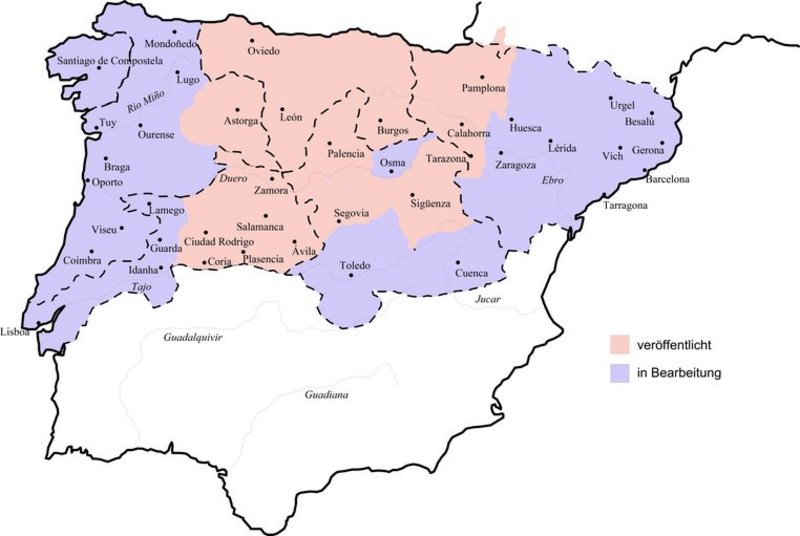
The sub-project "Iberia Pontificia," in which external scholars were also involved, explored the relations of the Papacy with the historical landscapes of Spain and Portugal up to the year 1198. For this purpose, all charters and other written news on contacts with the Papacy were processed in the form of registers for each bishopric.
The project encompassed work on the Iberia Pontificia, specifically the bishoprics of Astorga, Ávila, Burgos, Calahorra, Ciudad Rodrigo, Coria, León, Oviedo, Palencia, Pamplona, Plasencia, Salamanca, Segovia, Sigüenza, Tarazona and Zamora.
The project also worked closely with a research enterprise funded by the Spanish Ministry of Science and coordinated by Prof Dr Fernando López Alsina (Santiago de Compostela), entitled "El Papado y sus relaciones con la sociedad y los reinos de la Península Ibérica (ss. VIII-XIII): protagonistas, tipos de contactos, problemas y consecuencias integradoras (I)." Further cooperation existed with the project Corpus Documentale Latinum Gallaeciae (CODOLGA), which makes the Latin-language medieval historiography of Galicia accessible as a digital text corpus.
Publications of the sub-project:
- Dioecesis Abulensis (F. Engel). Published 2016 as Iberia Pontificia IV (together with Coria, Ciudad Rodrigo, Palsencia and Salamanca).
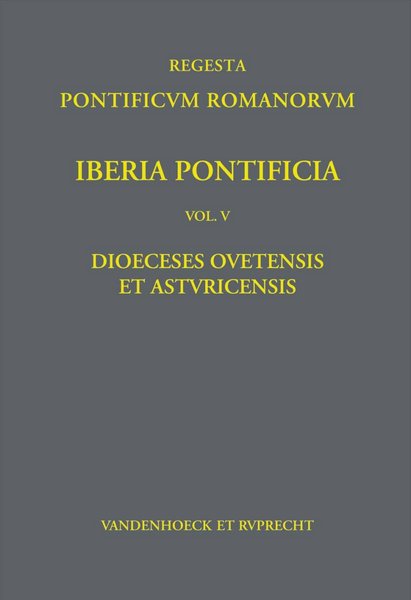
- Dioecesis Asturicensis (S. Domínguez Sánchez and D. Berger). Published 2019 as Iberia Pontificia V (together with Oviedo).
- Dioecesis Burgensis (D. Berger). Published 2012 as Iberia Pontifica I.
- Dioecesis Calagurritana (F. Engel). Published 2022 as Iberia Pontificia VI (together with Pamplona and Tarazona).
- Dioecesis Legionensis (S. Domínguez Sánchez with D. Berger). Published 2013 as Iberia Pontificia II.
- Dioecesis Palentina (D. Berger). Published 2015, reprint 2021 as Iberia Pontificia III.
- Dioecesis Pampilonensis (Thomas Czerner). Published 2022 as Iberia Pontificia VI (together with Calahorra and Tarazona).
- Dioecesis Salmanticensis, Cauriensis, Civitatensis, Placentia (J. L. Martín Martín with F. Engel). Published 2016 as Iberia Pontificia IV (together with Ávila).
- Dioeceses Segobiensis et Seguntina (D. Berger). Published 2024 as Iberia Pontificia VIII.
- Dioecesis Tirasonensis (F. Engel). Published 2022 as Iberia Pontificia VI (together with Calahorra and Pamplona).
- Dioecesis Zamorensis (S. Domínguez Sánchez, F. Engel, J. L. Martín Martín). Published 2024 as Iberia Pontificia IX.
- Hispania Romana et Visigothica (C. Knie, S. Panzram, L. Livorsi, R. Selvaggi). Published 2022 ass Iberia Pontificia VII.
Sub-Project: Dalmatia-Croatia Pontificia
Within the sub-project "Dalmatia-Croatia Pontificia," edited by Dr Waldemar Könighaus, the relations of the Papacy to the secular powers of the historical landscapes of Dalmatia and Croatia as well as to the archbishoprics, dioceses, monasteries and collegiate churches existing within their borders were studied in the form of regests.
Christianity can be traced back to the earliest times in these landscapes, due to their long affiliation to the Roman Empire. Legend has it that Peter himself sent his pupil Domnius to Salona to missionise Dalmatia. At the beginning of the 4th century, Emperor Diocletian chose Salona/Spalatum as his retirement residence, where he had a huge palace built. These facts as well as the geographical proximity to the Apennine peninsula probably also played an important role in the establishment of Diocletian's own Dalmatian patrimony. Likewise, the dioceses already founded here in antiquity with the metropolitan seats Diadora (Zara/Zadar), Salona (Spalatum/Split) and Epidaurum (Ragusa/Dubrovnik), including their suffragan bishoprics, look back on a long history. Together with the later ecclesiastical province of Antibari (Bar) and the diocese of Zagreb, which belonged to the Hungarian ecclesiastical province of Kalocsa, the volume includes the seventy dioceses which today are distributed among Croatia, Bosnia-Herzegovina, Montenegro and Albania. This brings together one of the largest contiguous territories and the most regests within one volume, published in 2021 as Dalmatia-Croatia Pontificia.
The New Jaffé: Papal Charters up to 1198
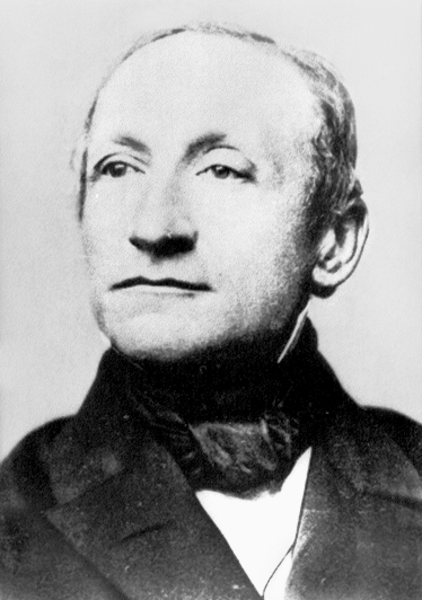
By 1851, Philipp Jaffé (1819-1870) had compiled a catalogue of the most important papal charters up until 1198, containing brief summaries of the documents’ contents. The second edition of his catalogue, published in 1885/1888, listed a total of 17,679 documents. Over a century later, Jaffé’s work became in need of revision for several reasons. New discoveries as well as the addition of decretal letters and the charters issued by papal legates have probably just about doubled the number of documents known to us. A considerable quantity of documents can now be determined with much more certainty as either “original” or “forged.” Many of the editions listed by Jaffé are either difficult to access or have become superseded by newer editions. The bibliographical details listed by Jaffé are outdated and have been replaced by references to recent scholarship.
The “new” Jaffé, edited by Dr Judith Werner, provides scholars with a much more complete and standardised portal to the largest body of sources for the history of the Middle Ages. To facilitate the addition of future scholarly research, the “new” Jaffé is being made available as a web-based version as well.
The following volumes have been published:
- Vol. I: Peter to Gregory I. (39–604), published 2016.
- Vol. II: Sabinian to Gregory IV. (604–844), published 2017.
- Vol. III: Sergius II. to Benedict VIII. (844–1024), published 2017.
- Vol IV: Johannes XIX. bis Alexander II. (1024–1073), published 2020.
Publications
Volumes of Regesta and Editions
- Iberia Pontificia VIII-IX: Dioeceses Secoviensis, Seguntina, Zamorensis, congesserunt Daniel Berger, Iacobus Domínguez Sánchez, Iosephus Ludovicus Martín Martín, Frank Engel, Gottingae 2024.
- Klaus Herbers (Hg.), Philipp Jaffé, Regesta Pontificum Romanorum. Tomus V (ab a. 1073 ad a. 1099). Bearbeitet von Magdalena-Maria Berkes, Jessica Breunig, Judith Werner, unter Mitarbeit von Waldemar Könighaus und Victoria Trenkle, Gottingae 2024.
- Iberia Pontificia VII: Hispania Romana et Visigothica, congesserunt Catharina Knie, Sabina Panzram, Laurentius Livorsi, Rochus Selvaggi; appendicem curavit Waldemarus Könighaus, Gottingae 2022.
- Iberia Pontificia VI: Provincia Tarraconensis - Dioeceses Pampilonensis, Calagurritana, Tirasonensis, congesserunt Franco Engel, Thomas Czerner, Daniel Berger, Gottingae 2022.
- Dalmatia-Croatia Pontificia, congessit Waldemarus Könighaus usus Iacobi Stipišić schedis, Gottingae 2021.
- Papsturkunden in Spanien. Vorarbeiten zur Hispania (Iberia) Pontificia. III. Kastilien, hrsg. v. Berger, Daniel / Herbers, Klaus / Schlauwitz, Thorsten (Abhandlungen der Akademie der Wissenschaften zu Göttingen. Neue Folge 50 – Studien zu Papstgeschichte und Papsturkunden), Berlin/Boston 2020.
- Klaus Herbers (Hg.), Philipp Jaffé, Regesta Pontificum Romanorum. Tomus IV (ab a. 1024 ad a. 1073). Bearbeitet von Judith Werner, Gottingae 2020.
- Iberia Pontificia V: Dioceses exemptae - Dioecesis Ovetensis et Provincia Bracarensis - Dioecesis Asturicensis, congesserunt Iacobus Domínguez Sánchez et Daniel Berger, Gottingae 2019.
- Klaus Herbers (Hg.), Philipp Jaffé, Regesta Pontificum Romanorum. Tomus III (ab a. 845 ad a. 1024). Bearbeitet von Judith Werner. Unter Mitarbeit von Waldemar Könighaus, Gottingae 2017.
- Klaus Herbers (Hg.), Philipp Jaffé, Regesta Pontificum Romanorum. Tomus II (ab a. 604 ad a. 844). Bearbeitet von Waldemar Könighaus und Thorsten Schlauwitz. Unter Mitarbeit von Cornelia Scherer und Markus Schütz, Gottingae 2017.
- Iberia Pontificia IV: Provincia Compostellana - Dioeceses Abulensis, Salmanticensis, Cauriensis, Civitatensis, Placentina, congesserunt Franco Engel et Josephus Ludovicus Martín Martín, Gottingae 2016.
- Klaus Herbers (Hg.), Philipp Jaffé, Regesta Pontificum Romanorum. Tomus I (ab a. 39 ad a. 604). Bearbeitet von Markus Schütz, Viktoria Trenkle und Judith Werner. Unter Mitarbeit von Kathrin Gowers, Waldemar Könighaus, Cornelia Scherer und Thorsten Schlauwitz, Gottingae 2016.
- Iberia Pontificia III: Provincia Toletana - Dioecesis Palentina, congessit Daniel Berger, Gottingae 2015.
- Polonia Pontificia. Provincia Gnesnensis - Archidioecesis Gnesnensis. Dioeceses Posnaniensis, Cracoviensis, Wratislaviensis, Plocensis, Wladislaviensis et Lubucensis. Pomerania - Dioecesis Caminensis exempta, congessit Waldemarus Könighaus, Gottingae 2014.
- Iberia Pontificia II: Dioeceses exemptae - Dioecesis Legionensis, congessit Iacobus Domínguez Sánchez cooperante Daniele Berger, Gottingae 2013.
- Iberia Pontificia I: Dioeceses exemptae - Dioecesis Burgensis, congessit Daniel Berger, Gottingae 2012.
- Bohemia-Moravia Pontificia vel etiam Germania Pontificia V/3: Provincia Maguntinensis. Pars VII: Dioeceses Pragensis et Olomucensis, congessit Waldemarus Könighaus usus Winfriedi Irgang schedis, Gottingae 2011.
- Carl Erdmann, Papsturkunden in Portugal (Abhandlungen der Gesellschaft der Wissenschaften zu Göttingen. Philologisch-historische Klasse, Neue Folge 20), Berlin 1927 (Digitalisierte pdf-Version. Erstellt von Matthias Witzleb. Göttingen 2009).
Studies on Papal History and Papal Charters
- Judith Werner, Papsturkunden vom 9. bis ins 11. Jahrhundert. Untersuchungen zum Empfängereinfluss auf die äußere Urkundengestalt (Abhandlungen der Akademie der Wissenschaften zu Göttingen. Neue Folge 43 – Studien zu Papstgeschichte und Papsturkunden), Berlin/Boston 2017.
- Lotharingien und das Papsttum im Früh- und Hochmittelalter. Wechselwirkungen im Grenzraum zwischen Germania und Gallia, hrsg. von Klaus Herbers und Harald Müller (Abhandlungen der Akademie der Wissenschaften zu Göttingen. Neue Folge 45 – Studien zu Papstgeschichte und Papsturkunden), Berlin-Boston 2017.
- Andreas Holndonner, Kommunikation - Jurisdiktion - Integration. Das Papsttum und das Erzbistum Toledo im 12. Jahrhundert (ca. 1085-1185) (Abhandlungen der Akademie der Wissenschaften zu Göttingen. Neue Folge 31 – Studien zu Papstgeschichte und Papsturkunden), Berlin-Boston 2014.
- Von Outremer bis Flandern. Miscellanea zur Gallia Pontificia und zur Diplomatik, hrsg. von Klaus Herbers und Waldemar Könighaus (Abhandlungen der Akademie der Wissenschaften zu Göttingen. Neue Folge 26 – Studien zu Papstgeschichte und Papsturkunden), Berlin-Boston 2013.
- Das begrenzte Papsttum. Spielräume päpstlichen Handelns: Legaten - Delegierte Richter - Grenzen, hrsg. von Klaus Herbers, Fernando López Alsina und Frank Engel (Abhandlungen der Akademie der Wissenschaften zu Göttingen. Neue Folge 25 – Studien zu Papstgeschichte und Papsturkunden), Berlin-Boston 2013.
- Rom und die Regionen. Studien zur Homogenisierung der lateinischen Kirche im Hochmittelalter, hrsg. v. Jochen Johrendt und Harald Müller (Abhandlungen der Akademie der Wissenschaften zu Göttingen. Neue Folge 19 – Studien zu Papstgeschichte und Papsturkunden), Berlin-Boston 2012.
- Erinnerung, Niederschrift, Nutzung. Das Papsttum und die Schriftlichkeit im westeuropäischen Mittelalter, hrsg. von Klaus Herbers und Ingo Fleisch (Abhandlungen der Akademie der Wissenschaften zu Göttingen, N. F. 11 – Studien zu Papstgeschichte und Papsturkunden), Berlin-New York 2011.
- Das Papsttum und das vielgestaltige Italien. Hundert Jahre Italia Pontificia, hrsg. von Klaus Herbers und Jochen Johrendt (Abhandlungen der Akademie der Wissenschaften zu Göttingen. Neue Folge 5 – Studien zu Papstgeschichte und Papsturkunden), Berlin-New York 2009.
- Römisches Zentrum und kirchliche Peripherie. Das universale Papsttum als Bezugspunkt der Kirchen von den Reformpäpsten bis zu Innozenz III., hrsg. von Jochen Johrendt und Harald Müller (Neue Abhandlungen der Akademie der Wissenschaften zu Göttingen, Phil.-hist. Klasse, Neue Folge 2 – Studien zu Papstgeschichte und Papsturkunden), Berlin-New York 2008.
Further Publications
- Anglia Pontificia – Subsidia I. Collectiones epistolarum pars I-III: Lanfranci Cantuariensis archiepiscopi, S. Anselmi Cantuariensis archiepiscopi, Gilberti Foliot Gloecestriae abbatis et Herefordensis, dein Londoniensis episcopi epistolae, congesserunt Rudolfus Hiestand et Stephanus Hirschmann, Gottingae 2011.
- Santiago Domínguez Sánchez - Klaus Herbers (Coords.), Roma y la Penínsular Ibérica en la alta edad media. La construcción de espacios, normas y redes de relación. - Rom und die iberische Halbinsel im Hochmittelalter. Die Konstruktion von Räumen, Normen und Netzwerken, León-Göttingen 2009.
Annual reports of the Pius Foundation for Papal Document Research published in the Deutsches Archiv für Erforschung des Mittelalters
- Bericht über das Jahr 2007, in: Deutsches Archiv 64/1 (2008), S. 127-132. (PDF-Datei zum Download).
- Bericht über das Jahr 2008, in: Deutsches Archiv 65/1 (2009), S. 161-167. (PDF-Datei zum Download).
- Bericht über das Jahr 2009, in: Deutsches Archiv 66/1 (2010), S. 145-151. (PDF-Datei zum Download).
- Bericht über das Jahr 2010, in: Deutsches Archiv 67/1 (2011), S. 135-144. (PDF-Datei zum Download).
- Bericht über das Jahr 2011, in: Deutsches Archiv 68/1 (2012), S. 143-151. (PDF-Datei zum Download).
- Bericht über das Jahr 2012, in: Deutsches Archiv 69/1 (2013), S. 149-159. (PDF-Datei zum Download).
- Bericht über das Jahr 2013, in: Deutsches Archiv 70/1 (2014), S. 205-216. (PDF-Datei zum Download).
- Bericht über das Jahr 2014, in: Deutsches Archiv 71/1 (2015), S. 193-203. (PDF-Datei zum Download).
- Bericht über das Jahr 2015, in: Deutsches Archiv 72/1 (2016), S. 197-206. (PDF-Datei zum Download).
People
Executive Committee:
Prof Dr Klaus Herbers (Chair and Project Director, Erlangen-Nuremberg) | Prof Dr Irmgard Fees (LMU Munich) | Prof Dr Günther Görz (Erlangen-Nuremberg) | Prof Dr Theo Kölzer (Bonn) | Prof Dr Fernando López Alsina (Santiago de Compostela) | Prof Dr Werner Maleczek (Vienna) | Prof Dr Harald Müller (Aachen)
Editorial Staff:
Dr Daniel Berger (Iberia) | Thomas Czerner, M. A. (Iberia) | Frank Engel, M. A. (Iberia) | Dr Waldemar Könighaus (Eastern Central Europe, Jaffé) | Dr Thorsten Schlauwitz (Digitisation, Iberia) | Dr Judith Werner (Jaffé)