
The Earliest Translations of the Pauline Epistles
The British-German AHRC-DFG project The Earliest Translations of the Pauline Letters conducted a new survey of the earliest translations of the Pauline letters. The translations into Gothic, Ethiopic, Latin, Coptic, and Syriac provide important insights into the textual history of the New Testament in antiquity and also illuminate the reception of these letters in various early Christian communities.
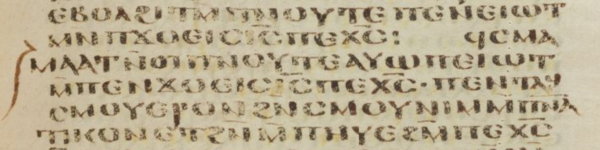
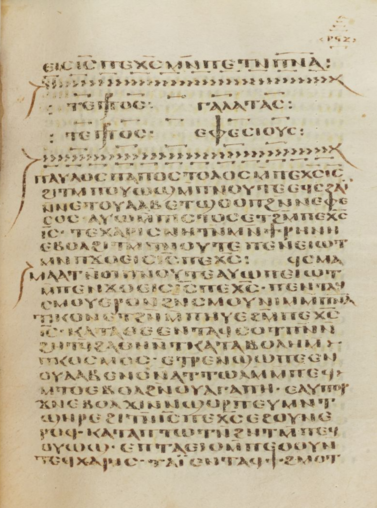
The German project partners in Münster (Institute for New Testament Textual Research) and Göttingen (Göttingen Academy of Sciences and Humanities) examined and catalogued the numerous Coptic manuscripts in the various Coptic literary dialects identified since Horner’s edition (1920), and produced complete electronic transcriptions of the Sahidic manuscripts of Galatians and Ephesians, as well as the smaller Coptic dialect versions.
The British partners prepared a complete edition of the Old Latin textual witnesses (Vetus Latina) for Galatians, replacing the outdated and incomplete edition of Sabatier (1743). In the final year of the project, the partners came together to review the textual attestation of the versions in light of the new material, which had been compiled for the Editio Critica Maior of the Greek New Testament in collaboration with project partners from Italy and the USA working on the Gothic and Ethiopic versions.
The project made new scholarly sources accessible - including a digital synoptic edition of the Coptic witnesses and a reconstruction of the early Latin textual types - in order to trace the early transmission of the Pauline letters and gain a better understanding of the relationships between these early linguistic and translation traditions. The material studied was integrated into the Editio Critica Maior, the most comprehensive edition of the New Testament ever produced. The insights gained in the project have the potential to modify the text of the Pauline letters both in scholarly editions of the Greek original and in modern translations, thereby directly influencing Christian theology and practice today.
Project Director
Dr. Frank Feder