Was braucht unser Energiesystem der Zukunft?

Urbanity within the integrative and competing relationship structure of seigniorial rulership and civic community

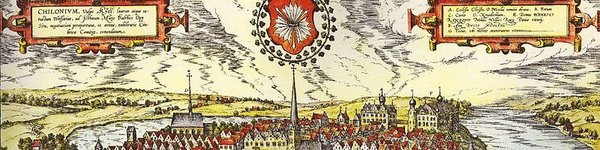
At the centre of the project is the study of the approximately 900 late medieval and early modern residential cities of the Holy Roman Empire, which formed an important element of the European urbanisation processes between the 14th and the early 19th century, the fusion of urban and aristocratic forms of life, the development of the feudal rule and pre-modern statehood.

In interdisciplinary collaboration between social and economic history, regional, constitutional, and art history, the focus is primarily on the already quantitatively dominant small-scale contexts outside the major residence cities, compiled in a four-volume handbook. In addition, exemplary studies with historical and art-historical emphasis address the treatment of specific research questions. For example, the project examined the former residence of the Dukes of Pomerania, Barth, on the Baltic coast or the comital Mansfeld on the edge of the Harz, the small town of Rappoltsweiler of the Lords of Rappoltstein in Alsace or the prince-bishop’s Brixen in South Tyrol. The underlying hypothesis was that the social forms investigated, such as ‘town’ and ‘rule,’ ‘state,’ and ‘court,’ were less antagonistic than complementary and integrative in orientation.

The project is carried out at the Göttingen Academy of Sciences and Humanities in Lower Saxony and is funded within the framework of the Academies Programme by the Federal Republic of Germany and the State of Schleswig-Holstein.


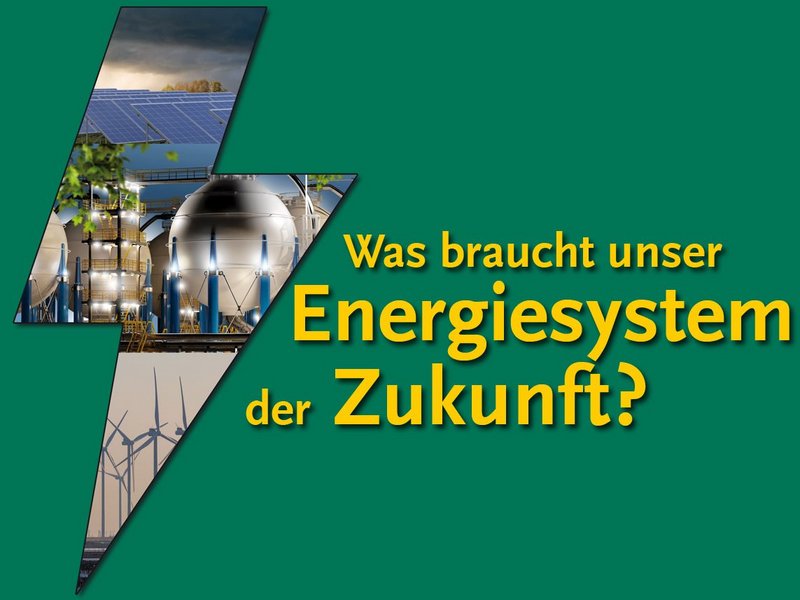
Was braucht unser Energiesystem der Zukunft?

Akademie der Wissenschaften zu Göttingen Kategorien News und Veranstaltungen Akademie

Collage: Sauer-Marketing

Akademie im Gespräch

Altes Rathaus, 10. Dezember 2026, 18.00 Uhr

Der Anteil erneuerbarer Energien am Stromverbrauch in Deutschland lag in den ersten drei Quartalen des Jahres 2026 im Durchschnitt bei rund 61 Prozent. Allerdings sorgen Solar- und Windenergie im Stromnetz jahreszeitlich und wetterbedingt für Schwankungen. Diese auszugleichen ist die große Herausforderung für die Zukunft unseres Energiesystems. Und damit verbunden sind folgende Fragen: Wie können Batterien eingesetzt werden? Sind unsere Verteilernetze für die Energiewende ausgelegt? Welchen Beitrag könnten die Stadtwerke durch ein smartes Management und mit Hilfe der Digitalisierung leisten? Wie müssen wir Verbraucher unser Verhalten ändern, und welche Kosten kommen auf uns zu? 

Ideen und Ansätze gibt es viele: Mit Hilfe der Elektrolyse kann Strom in Wasserstoff umgewandelt und so für den Winter gespeichert werden. Durch digitalisierte Netze könnten Stadtwerke Angebot und Nachfrage zu einem Ausgleich bringen und ein Geschäftsmodell entwickeln, bei dem private Haushalte gleichzeitig zu Produzenten und Konsumenten werden. Wie weit ist diese Entwicklung, und was ist jetzt zu tun? Darüber möchten wir Sie bei der kommenden Veranstaltung unserer Reihe AKADEMIE IM GESPRÄCH informieren und mit Ihnen diskutieren. Die Veranstaltung findet in Kooperation mit der Stadt Göttingen statt. Der Eintritt ist frei. Weitere Informationen finden Sie hier.

Akademie der Wissenschaften zu Göttingen Kategorien News und Veranstaltungen Akademie

Contact leader of department

Prof. Dr. Jan Hirschbiegel
Arbeitsstelle Kiel
Christian-Albrechts-Universität zu Kiel
Philosophische Fakultät
Historisches Seminar
Olshausenstr. 40
D-24098 Kiel (Briefe)
D-24118 Kiel (Päckchen)

Phone: [0049] 0431/880-1484
Fax: [0049] 0431/880-1524
Email: hirschbiegel@email.uni-kiel.de