Wanderausstellung: „Çirayê me“ – Êzîdische Lebenswelten und Archivfotografien

Urbanity within the integrative and competing relationship structure of seigniorial rulership and civic community

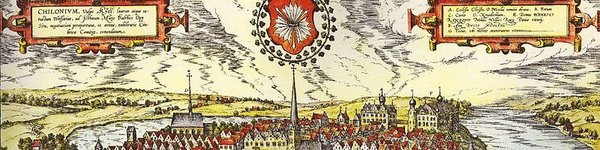
At the centre of the project is the study of the approximately 900 late medieval and early modern residential cities of the Holy Roman Empire, which formed an important element of the European urbanisation processes between the 14th and the early 19th century, the fusion of urban and aristocratic forms of life, the development of the feudal rule and pre-modern statehood.

In interdisciplinary collaboration between social and economic history, regional, constitutional, and art history, the focus is primarily on the already quantitatively dominant small-scale contexts outside the major residence cities, compiled in a four-volume handbook. In addition, exemplary studies with historical and art-historical emphasis address the treatment of specific research questions. For example, the project examined the former residence of the Dukes of Pomerania, Barth, on the Baltic coast or the comital Mansfeld on the edge of the Harz, the small town of Rappoltsweiler of the Lords of Rappoltstein in Alsace or the prince-bishop’s Brixen in South Tyrol. The underlying hypothesis was that the social forms investigated, such as ‘town’ and ‘rule,’ ‘state,’ and ‘court,’ were less antagonistic than complementary and integrative in orientation.

The project is carried out at the Göttingen Academy of Sciences and Humanities in Lower Saxony and is funded within the framework of the Academies Programme by the Federal Republic of Germany and the State of Schleswig-Holstein.


Wanderausstellung: „Çirayê me“ – Êzîdische Lebenswelten und Archivfotografien

Akademie der Wissenschaften zu Göttingen Kategorien News und Veranstaltungen Akademie

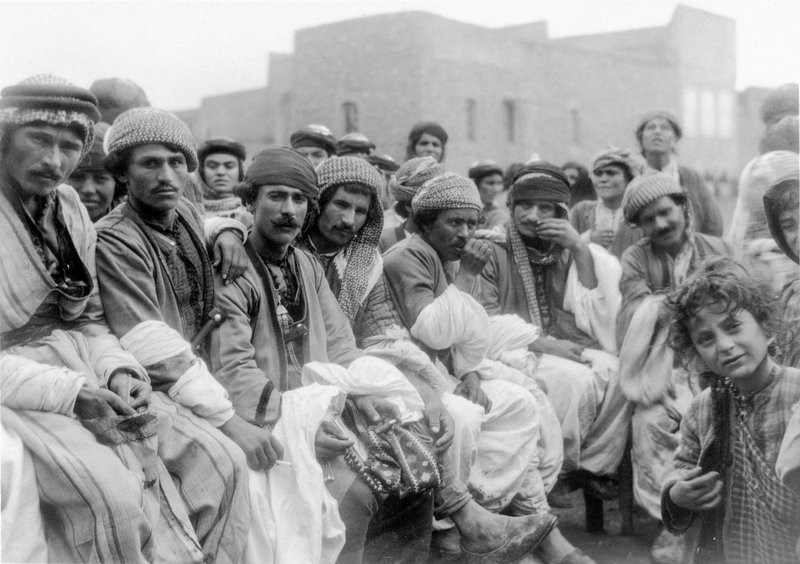
Foto: Penn Museum Archives

Im Rahmen des Hannah Arendt Fellowships von Nathaniel Brunt, Ph.D. (im Tandem mit Prof. Dr. Ina Blümel an der TIB Hannover) zeigt die Wanderausstellung „ÇIRAYÊ ME: Êzîdische Lebenswelten und Archivfotografien – zwischen Alltag, Tradition und Erinnerung“ erstmals in der Diaspora bislang verborgene Einblicke in die êzîdische Lebenswelt.

Das Projekt bringt familiäre und institutionelle Fotosammlungen zusammen und präsentiert 50 bislang unveröffentlichte Archivfotografien aus den Jahren 1927 bis 1938, die im Nordirak – u.a. in Laliş, Başîqa-Bahzanê und Şingal – bei archäologischen Ausgrabungen des Penn Museum entstanden. Nach fast einem Jahrhundert im Archiv wurden diese historischen Aufnahmen im Rahmen des Sersal-Projekts identifiziert, katalogisiert, digitalisiert und den Gemeinschaften in der Herkunftsregion sowie der Diaspora wieder zugänglich gemacht.

In Deutschland lebt mit geschätzten 150.000 bis 250.000 Menschen die weltweit größte êzîdische Diasporagemeinde, mit Schwerpunkt in Niedersachsen und Nordrhein-Westfalen. Die Stadt Celle nimmt dabei eine besondere Rolle ein: Sie gilt als die größte êzîdische Gemeinde Deutschlands und bildet die erste Station dieser Wanderausstellung, die im weiteren Verlauf in verschiedenen êzîdischen Kulturzentren zu sehen sein wird.

Der Titel „ÇIRAYÊ ME“ bedeutet sinngemäß „Unser Licht“. Im Êzîdentum steht die çira (das Licht) für Leben, Weisheit, Wahrheit und inneres Licht. Die Ausstellung versteht sich als Einladung, Erinnerung über Generationen und Grenzen hinweg zu teilen, Begegnungsräume zu schaffen und das êzîdische fotografische Erbe zu bewahren.

Erste Station der Wanderausstellung:

21. bis 24. Oktober 2026
Mala Êzdiyan Celle / Êzîdisches Kulturzentrum e. V., An der Koppel 21, 29227 Celle
Eröffnung: Mittwoch, 21. Oktober 2026, 18:00 bis 20:30 Uhr (Einfinden ab 17:30 Uhr)

Akademie der Wissenschaften zu Göttingen Kategorien News und Veranstaltungen Akademie

Contact leader of department

Prof. Dr. Jan Hirschbiegel
Arbeitsstelle Kiel
Christian-Albrechts-Universität zu Kiel
Philosophische Fakultät
Historisches Seminar
Olshausenstr. 40
D-24098 Kiel (Briefe)
D-24118 Kiel (Päckchen)

Phone: [0049] 0431/880-1484
Fax: [0049] 0431/880-1524
Email: hirschbiegel@email.uni-kiel.de